Technology advisory — Enterprise Architecture
Make the decisions stick.
Architecture is the set of decisions your organisation has already made, whether or not anyone wrote them down. The work is making those decisions visible, deciding them at the right altitude, and keeping them from being relitigated every quarter.
The problem
What it looks like from the inside
Architecture friction rarely shows up as a bad decision. It shows up as a decision nobody can find, made by someone who was not supposed to make it, revisited for the third time this year.
Escalation by default
Choices a team could own arrive at a governance forum, and choices the forum should own get made quietly in a pull request.
No decision record
The rationale lives in the heads of two people. When they leave, the debate restarts from zero.
Review as a queue
Architecture review becomes a gate teams route around instead of a service they use.
The model
Technology Decision Domain Architecture (TDDA)
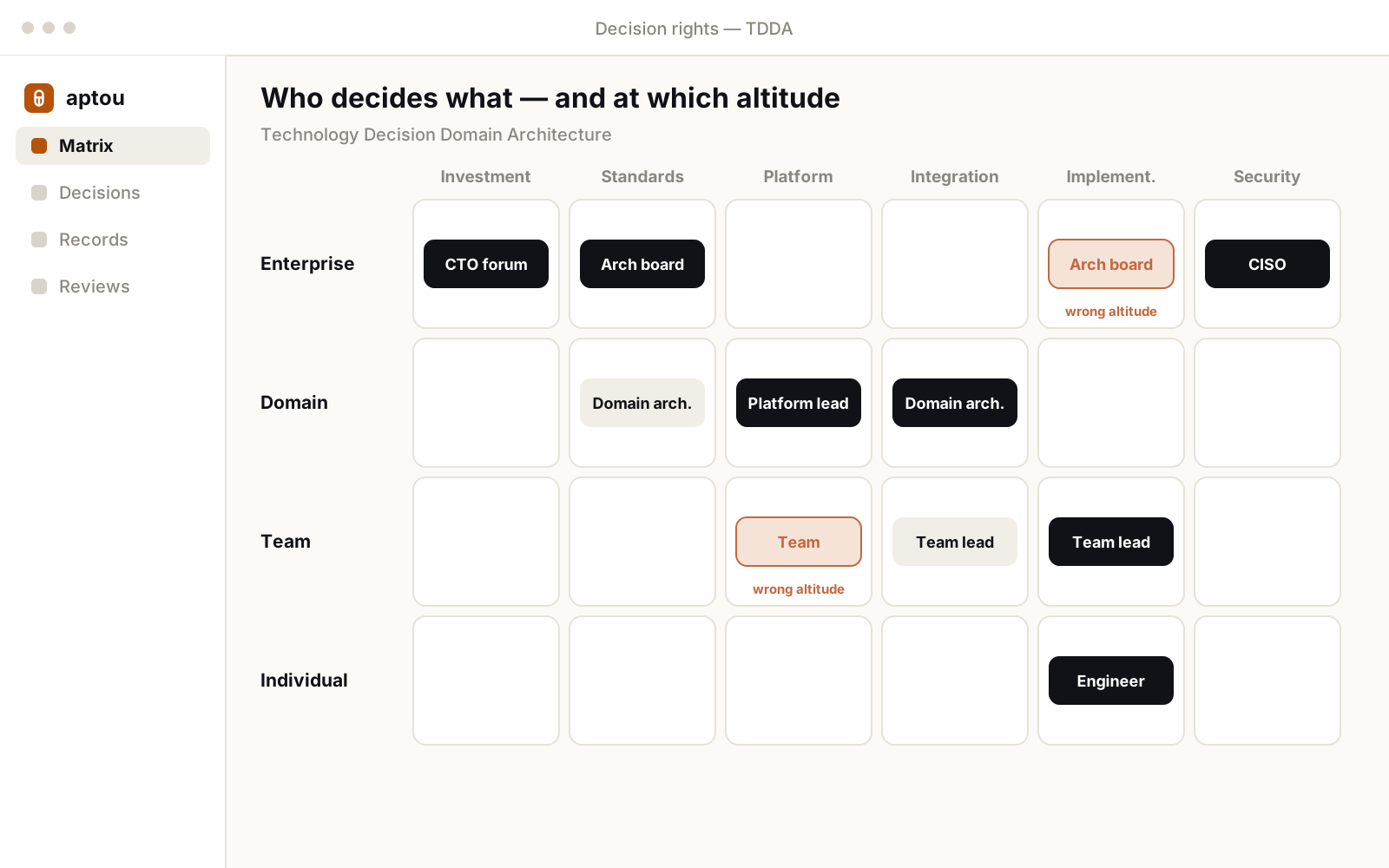
Most architecture friction is caused by decisions happening at the wrong altitude — enterprise-level calls made by individual teams, or team-level decisions escalated to committees with no business being involved.
What you end up with
A decision system your organisation can run without us: who decides what, at which altitude, recorded in a form that survives a handover.
For: Enterprise, solution and domain architects; principal engineers; the VP or CTO who owns the review forum.
Related workshops
Architecture Decision & Technical Clarity
Eliminate architectural ambiguity and technical decision bottlenecks through clear decision frameworks and accountability patterns.
You leave with: ADR/ADL templates, decision backlog, prioritisation framework
1 dayEvent Storming
Developers, domain experts and business stakeholders in the same room, speaking the same language, discovering the same system — in one day.
You leave with: Event timeline, domain hotspot map, aggregate boundaries, process ownership canvas
Other practices